 Business License
How HCJMPCBA Supports Low MOQ Without the Traditional Volume Penalty
Introduction
The electronics industry is changing faster than ever.
Instead of launching a single product in millions of units, companies are now developing multiple hardware variants simultaneously. Robotics, AI devices, industrial automation, medical electronics, EV accessories, and IoT products often begin with dozens—or even hundreds—of engineering revisions before entering full-scale production.
This shift has fundamentally changed PCB assembly.
Today, manufacturers are no longer judged solely by how many boards they can produce. They are evaluated by how efficiently they can manage engineering changes, maintain quality across multiple product variants, and transition prototypes into repeatable mass production.
This manufacturing model is commonly known as High Mix Low Volume (HMLV) PCBA.
Unfortunately, many EMS providers still operate with processes optimized for high-volume production. Frequent line changeovers, BOM variations, and engineering revisions quickly become sources of delay, inconsistency, and hidden costs if they are not managed systematically. Industry studies consistently identify engineering coordination and process control—not SMT speed—as the primary challenges in successful HMLV manufacturing.
At HCJMPCBA, HMLV production is approached as an engineering management discipline rather than simply another assembly service.
What Does Low MOQ High Mix PCBA Really Mean?
Many buyers assume Low MOQ simply means accepting small orders.
That definition is incomplete.
A mature HMLV manufacturing system typically involves:
Multiple PCB revisions
Numerous BOM configurations
Frequent engineering changes
Small production quantities
Rapid product iterations
Different testing strategies for different products
The complexity comes from product diversity—not production quantity.
One customer may have:
Standard controller
Wireless version
Automotive version
Medical version
International version
Although these products may share nearly identical PCB layouts, they often require different:
Components
Firmware
SMT programs
Test fixtures
Functional verification procedures
Each variant must be treated as an independent manufacturing project while maintaining consistent quality.
Why More OEMs Are Moving Toward Low MOQ Production
Hardware development has become dramatically shorter.
Five years ago, many products remained unchanged for years.
Today:
AI hardware evolves every few months.
Robotics platforms continuously add sensors.
Medical devices undergo ongoing compliance updates.
Industrial controllers receive regular firmware improvements.
Instead of purchasing 50,000 units immediately, engineering teams now prefer a phased approach:
Prototype
↓
Engineering Validation Test (EVT)
↓
Design Validation Test (DVT)
↓
Production Validation Test (PVT)
↓
Mass Production
This significantly reduces technical risk while accelerating product development.
Consequently, manufacturers capable of supporting Low MOQ production without sacrificing process stability have become strategic partners rather than simple suppliers. Modern HMLV operations emphasize controlled changeovers, standardized engineering workflows, and flexible scheduling rather than maximizing uninterrupted production runs.
Why HMLV PCBA Is Difficult
Many buyers believe SMT placement is the difficult part.
In reality, placement is often the easiest stage.
The true challenge lies in engineering management.
1. BOM Diversity
Every revision introduces component changes.
Different connectors
Different regulators
Different memory sizes
Alternative approved vendors
Without disciplined BOM management, incorrect component loading becomes inevitable.
2. Continuous Line Changeovers
Traditional production:
One setup
Thousands of boards
HMLV production:
Morning:
Industrial controller
Afternoon:
Robot controller
Evening:
Medical interface board
Each project requires:
New feeders
New stencil
New placement program
Different AOI recipe
Different SPI limits
Different functional tests
The objective is not reducing changeovers.
It is making every changeover predictable.
3. Engineering Revision Control
Prototype development rarely stops after Revision A.
Most products progress through:
Rev A
↓
Rev B
↓
Rev C
↓
Pilot Release
↓
Production Release
Every revision must remain completely traceable.
This is where configuration management becomes essential.
HCJMPCBA manages engineering updates using documented Method Numbers and Revision controls so that manufacturing always references the approved process documentation instead of relying on manual operator interpretation.
4. Inspection Strategy Cannot Be Standardized
Different products require different verification methods.
Industrial control boards
→ ICT + Functional Test
High-density BGA products
→ 3D SPI + X-Ray
Medical electronics
→ Additional process validation
Communication modules
→ RF testing
A universal inspection process rarely delivers optimal results.
Instead, mature manufacturers define product-specific Sample Plans and Test Conditions before production begins.
What Should Buyers Evaluate When Selecting an HMLV PCBA Manufacturer?
Equipment matters.
Engineering systems matter more.
Instead of asking only about SMT lines, experienced OEM teams often evaluate whether a supplier can provide evidence of consistent engineering execution. Typical evaluation points include documented process revisions, production traceability, inspection records, and repeatable quality controls.
A capable HMLV manufacturing partner should demonstrate:
Complete DFM Review
Potential issues are identified before production starts, including pad design, panelization, component spacing, thermal management, and manufacturability risks.
Controlled Engineering Documentation
Every production package should reference:
Method Number
Revision
Approved BOM
Assembly Drawing
Process Instructions
Product-Specific Validation
Inspection should be based on defined Sample Plans rather than arbitrary sampling.
Test Conditions should be documented before production.
Production Traceability
Reliable factories should support:
Lot
Batch
Serial Number
This enables rapid root-cause analysis if quality issues arise.
Raw Manufacturing Data
Instead of reporting only "PASS," advanced manufacturers preserve production evidence such as:
SPI measurements
AOI images
X-Ray reports
ICT logs
Functional Test records
These records provide objective evidence during qualification and future engineering changes.
How HCJMPCBA Supports Low MOQ Without the Traditional Volume Penalty
Supporting Low MOQ production requires far more than accepting small purchase orders.
At HCJMPCBA, projects begin with an engineering review that includes DFM analysis, BOM verification, process planning, and assembly risk assessment before manufacturing starts.
Each project receives documented Method Number and Revision control to ensure engineering changes remain synchronized across production.
Inspection strategies are defined according to product characteristics, with appropriate combinations of SPI, AOI, X-Ray, ICT, Flying Probe, and Functional Testing where applicable.
For customers requiring long-term manufacturing programs, production records can be organized around Lot, Batch, and Serial traceability, allowing historical verification of components, process parameters, and quality data.
This engineering-driven workflow helps reduce production risk while enabling smoother transitions from prototype builds to scalable manufacturing.
Conclusion
Low MOQ manufacturing should never mean lower manufacturing standards.
As product diversity increases across robotics, AI hardware, industrial automation, and medical electronics, successful HMLV production depends on disciplined engineering management rather than production volume alone.
When evaluating a manufacturing partner, buyers should look beyond machine lists and consider whether the supplier can demonstrate structured DFM reviews, documented process revisions, traceability, inspection planning, and verifiable manufacturing data.
Those capabilities ultimately determine whether a prototype evolves smoothly into a reliable production program.
Call to Action
If your project requires rapid prototyping, multiple product variants, or scalable Low MOQ manufacturing with engineering-level process control, HCJMPCBA provides end-to-end PCB assembly services designed for consistent quality and production readiness.
From DFM review and Method Number management to Sample Plans, documented Test Conditions, Raw Data reporting, and Lot/Batch/Serial traceability, our goal is to help engineering teams reduce manufacturing risk while preparing products for reliable volume production.
Explore our HMLV PCBA capabilities and contact HCJMPCBA to discuss your next project.
Recently Posted
-
Turnkey PCBA Assembly: Reclaim Hundreds of Engineering Hours for Your R&D Team
July 2, 2026The Hidden Time Drain in Traditional PCB DevelopmentIn today's fast-paced hardware development environment, R&D teams face Read More
 -
Electronic Circuits & PCBA: From Concept to Manufacturable Assembly
July 1, 2026Electronic circuits are interconnected networks of electronic components designed to perform a specific function. They are the fun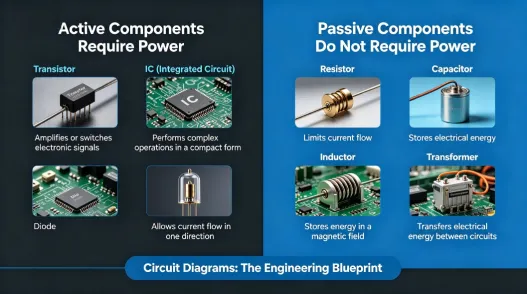 Read More
 -
Why does your PCB fail the EMC test? The hidden role of Shielding Assembly.
June 29, 2026Getting a prototype to function is one thing. Getting it to pass FCC or CE regulatory standards is an entirely different battle.Ma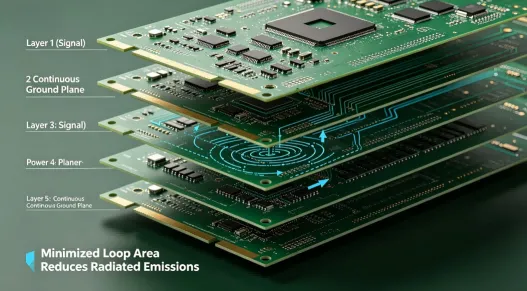 Read More
 -
Kingboard (KB) Announces 15% Price Hike: Navigating the 7th Raw Material Shock in Electronic Manufac
June 29, 2026The global electronics supply chain has just received another severe wake-up call. Kingboard Holdings Limited (KB), one of the wor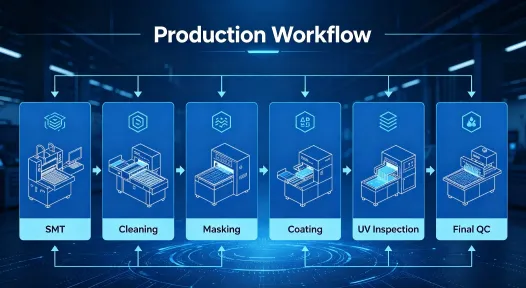 Read More

Contact Us

Recommended Products
-
 Lightweight Anti-Vibration Consumer & Industrial Drone Flight Control PCBANegotiableMOQ: 1 Piece
 -
RF & Ultrasonic Household/Salon Beauty Equipment High Power PCBA BoardNegotiableMOQ: 1 Piece
-
Military Standard Wide Temperature Anti-Vibration Equipment High Reliability PCBANegotiableMOQ: 1 Piece
-
Low Noise Medical Monitoring & Testing Equipment High Reliability PCBANegotiableMOQ: 1 Piece
-
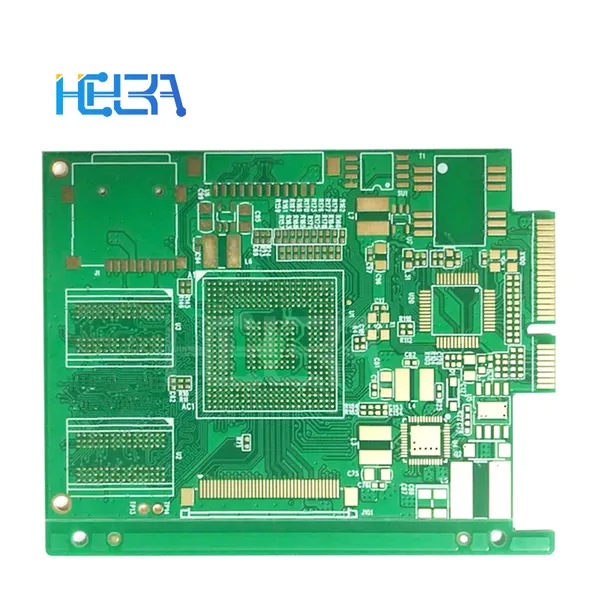
High Density AI Server & Edge Computing Module PCBA With BGA Precision SolderingNegotiableMOQ: 1 Piece
-
High Density AI Server Computing Module PCBA Circuit Board With Precision BGA AssemblyNegotiableMOQ: 1 Piece
-
Custom Industrial PLC Automation Control PCBA Circuit Board for Factory Automation EquipmentNegotiableMOQ: 1 Piece
-
Custom Industrial Automation PLC & Drive Control PCBA Board | HCJMPCBANegotiableMOQ: 1 Piece
-
IoT Gateway Wireless Communication Module PCBANegotiableMOQ: 1 Piece
-
High Power Frequency Converter Drive PCBA BoardNegotiableMOQ: 1 Piece
-
Mini Wearable & Audio Consumer Electronics PCBANegotiableMOQ: 1 Piece
-
Low Power Smart Home Sensor & Gateway PCBANegotiableMOQ: 1 Piece
-
Lightweight UAV Drone Flight Control PCBA MainboardNegotiableMOQ: 1 Piece
-
RF & Ultrasonic Beauty Equipment PCBA Main BoardNegotiableMOQ: 1 Piece
-
Military Standard High-Reliability PCBA BoardNegotiableMOQ: 1 Piece
-
High Reliable Medical Device PCBA Control BoardNegotiableMOQ: 1 Piece
-
AI Server & Computing Module PCBA Circuit BoardNegotiableMOQ: 1 Piece
-
Custom Industrial Automation Control PCBA BoardNegotiableMOQ: 1 Piece
-
IoT Gateway Wireless Communication Module PCBA Circuit Board Custom ManufacturingNegotiableMOQ: 1 Piece
-
High Power Frequency Converter Mainboard Industrial Control PCBA Assembly ServiceNegotiableMOQ: 1 Piece